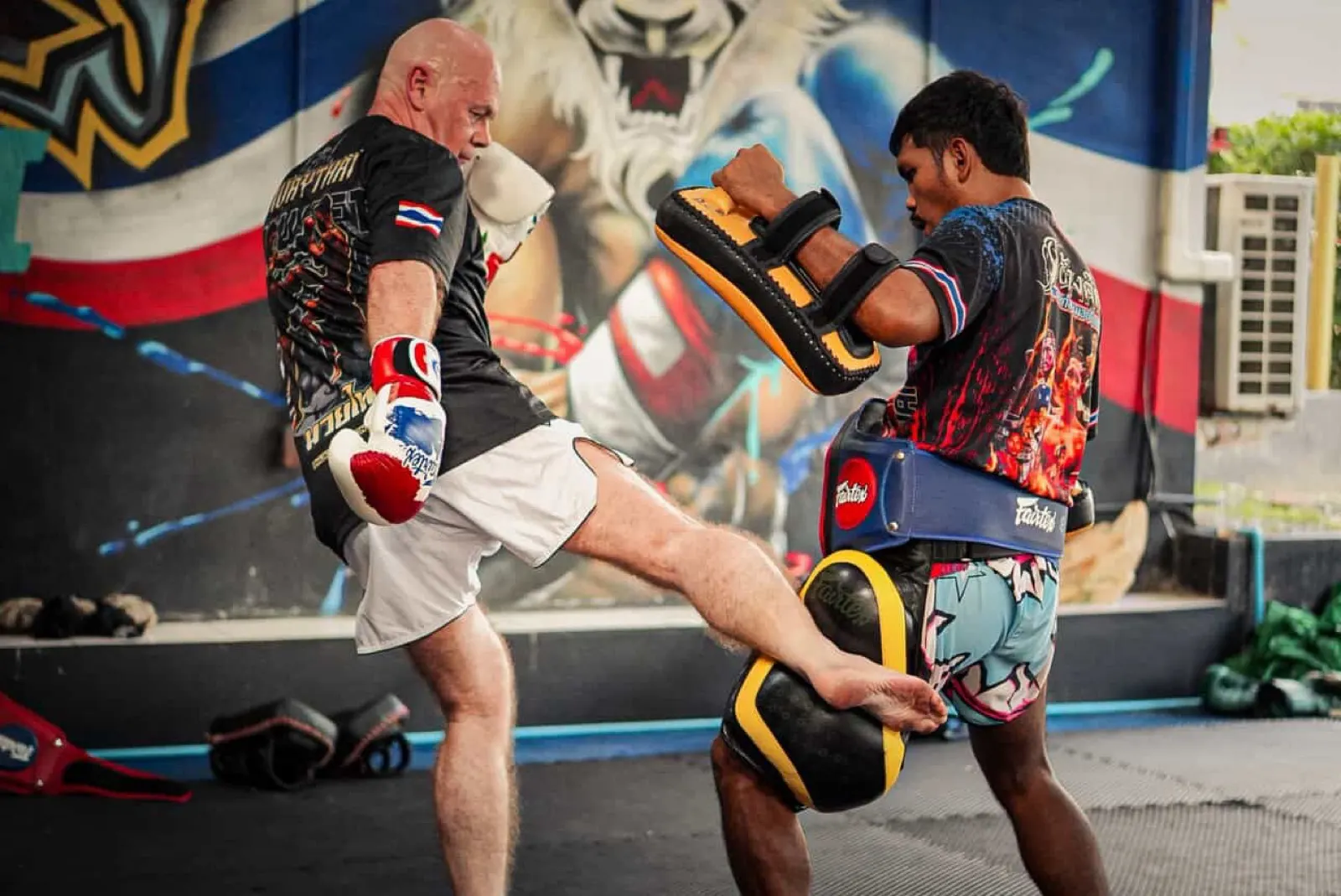
Key takeaways
- A first session is warm-up, basic technique, pad rounds and a cool down. There is no sparring and no contact you did not agree to.
- You will learn stance, guard, jab, teep and round kick in the first hour, and be able to throw all of them by the end of it.
- Age is not the barrier people think it is. Beginners in their thirties, forties and fifties start every week in Phuket.
- Bring sports clothes, a towel and water. Gloves, wraps and pads are provided in a session with Kru Marn.
- Three sessions a week is a sensible beginner rhythm. Shins, hips and skin need the recovery days more than your lungs do.
What happens in your first Muay Thai session?
A first Muay Thai session is a warm-up, a block of basic technique, pad rounds with the trainer, and a cool down. In a private 1-on-1 hour there is no sparring, no queue and no group to keep up with. The trainer sets the pace to what you can actually do, which in a first session usually means slower and more repetition than you expect, not less.
Here is how a private hour typically runs. A group class follows the same shape, with more people between you and the pads.
| Minutes | What you do | What it is for |
|---|---|---|
| 0 to 10 | Skipping rope, light movement, shadow boxing | Getting warm in the heat and loosening shoulders, hips and ankles |
| 10 to 20 | Stance, guard, footwork, then jab and teep (push kick) | Building a base so every strike after this comes from the right position |
| 20 to 40 | Pad rounds with the trainer, three to five rounds | The heart of Muay Thai training: you hit, he corrects, you do it again |
| 40 to 50 | Bag work, knees, elbows, a first look at the clinch | Repeating what you just learned without someone feeding it to you |
| 50 to 60 | Light conditioning, stretching, water | Finishing without leaving you wrecked for tomorrow |
Two things surprise almost everyone. The first is how much correcting happens: in a private hour the trainer stops you constantly, because a bad habit fixed in week one saves a year of undoing it. The second is the heat. An hour of pads in Phuket takes more out of you than an hour in an air conditioned gym at home.
Are you too old to start Muay Thai?
No. Age rules out competing at a high level, and that is not why most people walk into a gym in Phuket. Adults start in their thirties, forties and fifties every week here, and they train for years.
What changes with age is how you train, not whether you can. Warm-ups get longer. Hard sparring stops being the point. Recovery between sessions matters more than adding sessions. All of that is straightforward in a private hour, because the session is built around your knees, your back and your shoulders rather than around the middle of a group.
If you want proof that the over 50 crowd trains seriously, MuayThai50Plus is run by one of Kru Marn's own students and is written entirely for people starting later in life.
What to bring and what to wear
Almost nothing. Gloves, wraps and pads are provided in a session with Kru Marn, so you do not need to buy equipment before your first hour. Bring:
- Sports clothing you can kick in. Shorts and a t-shirt. Muay Thai shorts are cut high for a reason, but ordinary gym shorts are fine to start.
- A towel. You will need it more than you think.
- Water. More than you would take to a normal workout.
- A hair tie if your hair is long.
- Cash for the session, water and transport. Smaller gyms in Thailand are often cash-first.
You will train barefoot. Shoes come off before you step on the mats or into the ring, so bring footwear that is easy to slip off. If you train for more than a week or two, buying your own gloves and hand wraps is worth it for comfort and hygiene, and both are sold on Soi Ta-iad, the training street where Kru Marn teaches.
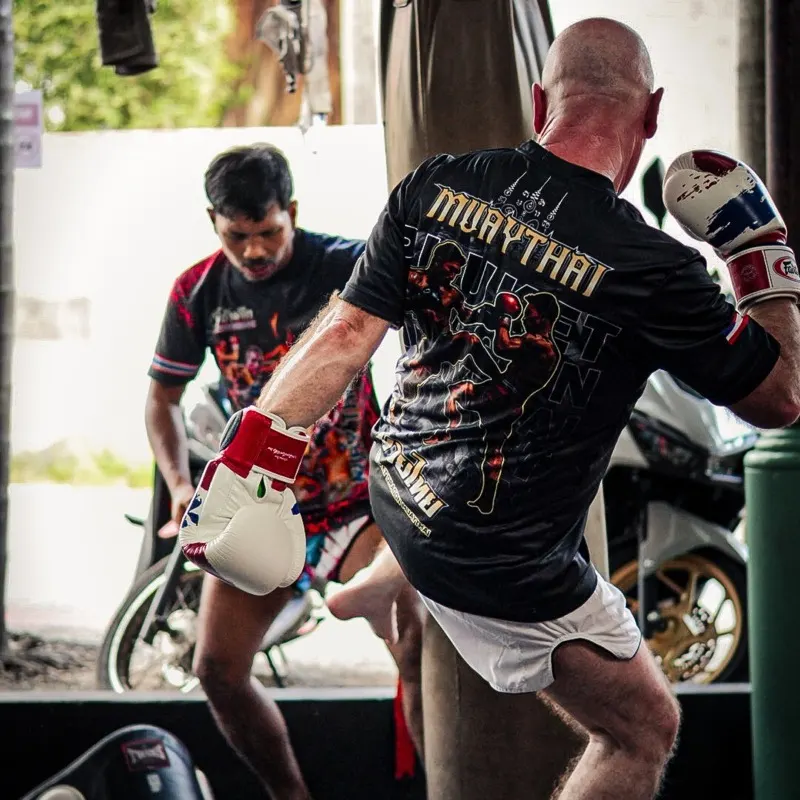
Gym etiquette in a Thai Muay Thai gym
Thai gyms are relaxed with foreigners, and nobody expects you to know the customs. Getting a few right anyway is noticed, and it costs nothing.
- Shoes off before the mats or the ring. Always.
- Do not step over people or equipment. Walk around a person sitting on the floor, and around gloves and pads rather than over them.
- Feet are low, heads are high. Do not point your feet at people or at a Buddha image or spirit house, and do not touch anyone's head, including a friendly ruffle.
- Greet your trainer and thank him. A simple "sawasdee krap" arriving and "kop khun krap" leaving goes a long way. Women say "ka" instead of "krap".
- Some traditional gyms ask women to enter the ring under the bottom rope rather than over the top. It varies by gym and it is a custom rather than a judgement. Ask if it matters to you.
- The wai kru ram muay is a fight ritual, not something you perform in a training session. You will see it if you go to a stadium, and it is worth watching.
Tell the trainer what hurts before the session starts, not after. Old knee, bad shoulder, back surgery, asthma, first workout in five years. A trainer can build an hour around any of that, but only if he knows. It is the single most useful sentence a beginner can say.
How sore will you be, and how often should you train?
Three sessions a week is a good beginner rhythm, and it is what most visitors to Phuket settle into. The limit on a first training trip is almost never fitness. It is shins, hips, and the skin on the top of your feet, all of which need days off to toughen up.
Expect your calves and shoulders to complain after session one, and your shins to be tender after your first real kicking session. That fades. What does not fade is the damage from training hard every single day in week one, which is the most common way people lose the back half of their trip.
If you are here for a month, a realistic plan looks like three sessions in week one, three or four in week two, and more only if your body is asking for it. The arithmetic for that is in our breakdown of what private training costs in Phuket, and the week by week plan is in how to fit Muay Thai into a Phuket holiday.
Five mistakes beginners make in their first week
- Going too hard on day one. Kicking a bag at full power with untrained shins in 32 degree heat ends training trips.
- Hiding an injury. The trainer will work around it. He cannot work around what you did not mention.
- Dropping the guard to kick harder. Power feels like progress. Position is progress.
- Under-drinking. You will sweat far more than at home, and you will feel it the next morning as a headache, not as thirst.
- Trying to learn everything at once. Stance, jab, teep and round kick. That is a good first week. Elbows and clinch will still be there in week two.
Is Muay Thai hard for beginners?
The movements are simple to learn and hard to do well. You will throw a jab, a teep and a round kick in your first hour, and they will be recognisable. Making them balanced, timed and repeatable when you are tired is the part that takes months, and it is also the part that makes the training interesting.
What makes it easier is not being fit beforehand. It is having somebody watching every repetition. In a full group class a trainer divides his attention between everyone in the room, and a beginner can spend most of the hour on a bag doing a technique slightly wrong. That is the practical case for starting with private sessions, especially if you only have a week or two in Thailand.
Frequently asked questions
Is Muay Thai hard for beginners?
The movements are simple to learn and hard to do well. In a first session you will cover stance, guard, jab, teep and round kick, and you will be able to throw all of them by the end of the hour. What takes time is balance, timing and doing it while tired. The physical side is the bigger shock for most people: an hour of padwork in Thai heat is harder than a gym workout, which is why a first session is usually kept shorter and slower.
Am I too old to start Muay Thai at 25, 30 or 40?
No. Age only rules out competing at a high level, and that is not why most people train. Adults start in their thirties, forties, fifties and beyond every week in Phuket. What changes with age is how you train, not whether you can: longer warm-ups, fewer hard sparring rounds and more recovery between sessions. A private trainer can build the session around your knees, back and shoulders, which a group class cannot.
What should I bring to my first Muay Thai session?
Sports clothing you can move in, a towel, more water than you think you need, and something to tie back long hair. Gloves, wraps and pads are provided in a session with Kru Marn, so you do not need to buy equipment first. Bring a little cash for water and transport, and expect to train barefoot.
How often should a beginner train Muay Thai?
Three sessions a week is a solid beginner rhythm, and it is what most visitors settle into. It leaves recovery days for shins, hips and skin, which is what limits people in their first week in Thailand, not fitness. Two sessions a day is for people on a long training trip who have built up to it, not for a first week.
Do I need to be fit before my first Muay Thai class?
No. Fitness is what the training builds, and a private session is set to your level from the first minute. Tell the trainer honestly what you can do and what hurts. That information changes the session, and it is the one thing a trainer cannot guess.
Book your first session
Kru Marn has taught complete beginners for more than 15 years. Every session is private, 700 baht, equipment included, at Dragon Muay Thai on Fitness Street. Tell him it is your first time and he will build the hour around that.
Book on WhatsApp More questions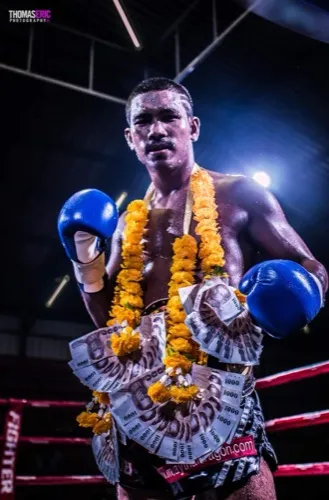
Kru Marn Muay Thai
Kru Marn (ครูหม่าน) is a former Southern Thailand Champion with 180 professional fights and 150 wins. He has taught private Muay Thai for more than 15 years at Dragon Muay Thai on Soi Ta-iad, Phuket, to everyone from first-timers to fighters in camp.
Keep reading
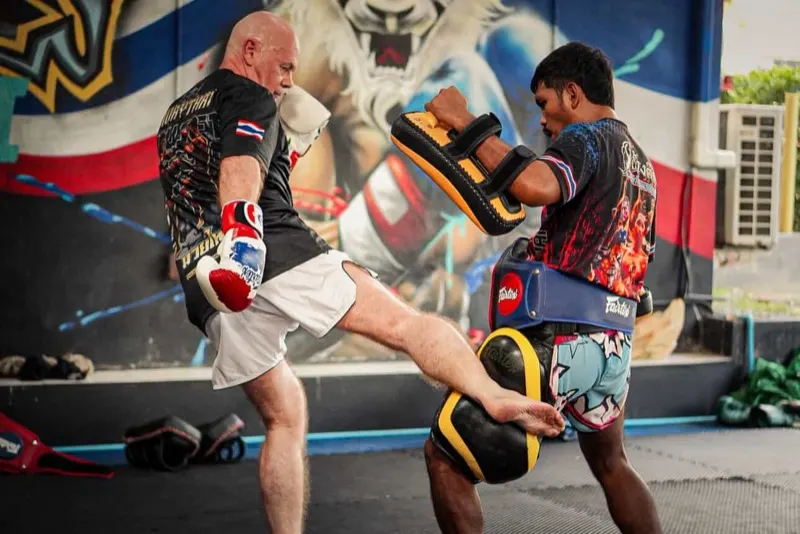
Dragon Muay Thai, Chalong: What Training There Is Like
Where the gym is, what makes it different from the big camps on the street, and how to book a private hour there.
Read the guideHow to Fit Muay Thai Into a Phuket Holiday
How many sessions actually fit in a week, when to train around the heat, and where to stay if training is the point.
Read the guide